
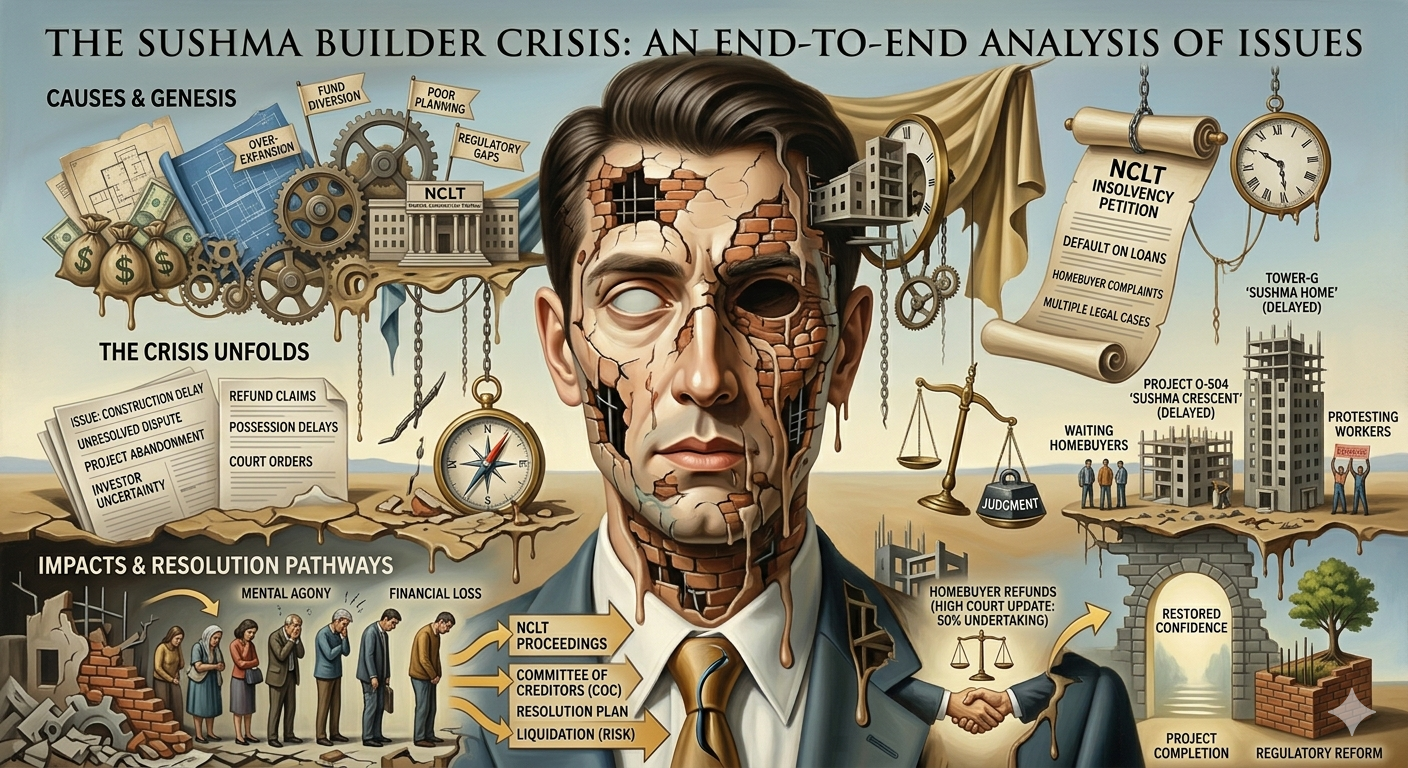
The Sushma Builder Crisis: An End‑to‑End Analysis of Issues and Customer Remedies
Introduction
Real estate in India has long been a sector filled with promise and peril. On one hand, developers offer modern housing complexes with amenities that rival global standards. On the other, delays, defaults, and disputes often leave homebuyers in distress. Among the names that have surfaced repeatedly in recent years is Sushma Buildtech, a prominent developer in Zirakpur and surrounding areas of Punjab.
This blog provides a 2000‑word deep dive into the issues faced by customers of Sushma Builder, the legal precedents surrounding such disputes, and the practical steps residents can take to safeguard their rights. It is designed as both an informative guide and a rallying call for collective action.
1. Background of Sushma Buildtech
Sushma Buildtech emerged in the early 2000s as a major player in the Chandigarh–Zirakpur real estate corridor. The company marketed projects like Sushma Crescent, Sushma Joynest, and Sushma Valencia, promising world‑class amenities, timely possession, and transparent dealings.
However, as projects expanded, complaints began to surface:
- Delays in possession: Flats were not handed over on time, leaving buyers paying both EMIs and rent.
- Missing amenities: Promised facilities such as clubhouses, swimming pools, and landscaped gardens were either incomplete or absent.
- Financial irregularities: Allegations of mismanagement of maintenance funds and hidden charges.
- Customer service failures: Poor communication, lack of accountability, and unresponsive CRM teams.
These issues culminated in legal battles across consumer courts, RERA, and even the Punjab & Haryana High Court.
2. Key Issues Faced by Customers
a) Delayed Possession
Perhaps the most common grievance, delayed possession has left thousands of families in limbo. Buyers often pay EMIs for loans while simultaneously renting accommodation, creating a double financial burden.
b) Non‑Delivery of Promised Amenities
Marketing brochures often highlight luxury features. Yet, residents report that many of these remain unfinished years after possession. This amounts to unfair trade practice under the Consumer Protection Act.
c) Builder Absconding or Non‑Responsive
In some cases, builders or their representatives have allegedly absconded, leaving residents without a point of contact. This creates a vacuum in management and accountability.
d) Financial Mismanagement
Residents allege misuse of maintenance funds, arbitrary charges, and lack of transparency in accounts. Without proper oversight, customers feel exploited.
e) Legal Complexity
Individual buyers often lack the resources to pursue lengthy legal battles. Builders exploit this by dragging cases, knowing that fragmented complaints weaken collective bargaining power.
3. Legal Precedents and Court Interventions
Supreme Court – Padmini Infrastructure v. Royal Garden RWA (2021)
- Builder failed to deliver promised facilities.
- Court ordered handover of possession to the RWA and compensation of ₹60 lakh.
- Lesson: Courts recognize RWAs as legitimate entities to safeguard residents.
State Consumer Commission – RWA vs Barnala Realtech (2024)
- Builder failed to provide amenities in Riverdale Aquagreens.
- Commission upheld RWA’s right to represent residents collectively.
- Lesson: RWAs can file consumer complaints on behalf of all members.
Punjab & Haryana High Court – Sushma Crescent Cases (2024–25)
- Multiple petitions filed against Sushma Buildtech for delays and refunds.
- Court ordered partial relief, including directions to RERA and consumer forums.
- Lesson: High Courts can intervene when lower forums fail to enforce compliance.
4. Why Forming an RWA is Critical
Benefits of an RWA
- Legal Standing: RWAs can sue builders collectively, reducing individual costs.
- Management Control: RWAs can demand handover of common areas and maintenance funds.
- Transparency: RWAs ensure accountability in managing community finances.
- Collective Bargaining: A united front strengthens negotiations with builders and authorities.
Steps to Form an RWA
- Register under the Societies Registration Act, 1860 or relevant state law.
- Draft bylaws covering membership, elections, and responsibilities.
- Elect office bearers (President, Secretary, Treasurer).
- Document builder defaults and prepare a legal strategy.
- File complaints collectively in consumer courts or RERA.
5. Legal Remedies Available to Customers
a) Consumer Protection Act
- File complaints for refunds, compensation, and enforcement of amenities.
- District, State, and National Commissions handle such cases.
b) RERA (Real Estate Regulatory Authority)
- Mandates timely possession and transparency.
- Customers can seek penalties, refunds, and directions to complete construction.
c) Civil Courts / High Court
- For larger disputes, RWAs can escalate to High Courts.
- Courts may order refunds, asset freezes, or transfer of management rights.
d) Criminal Complaints
- In cases of fraud or misappropriation, FIRs can be filed.
- Police investigations add pressure on defaulting builders.
6. Practical Steps for Customers
- Document Evidence
- Agreements, receipts, emails, and photographs of incomplete work.
- Unite Residents
- Form or join an RWA. Collective complaints carry more weight.
- Set Deadlines
- Give builders one last chance with a written deadline (e.g., 5th May 2026).
- File Complaints Collectively
- Approach consumer courts or RERA through the RWA.
- Seek Compensation
- Demand refunds, interest, and damages for financial loss and mental agony.
- Engage Media and Authorities
- Public pressure often accelerates resolution.
7. Risks and Challenges
- Builder Insolvency: Recovery may be limited if assets are depleted.
- Legal Delays: Courts can take years, though interim relief is possible.
- Community Coordination: RWAs require active participation and unity.
- Costs: Legal fees can be significant, though shared costs reduce burden.
8. Case Study: Hypothetical End‑to‑End Action Plan
Imagine residents of Sushma Crescent decide to act:
- They form an RWA and register it legally.
- They document all defaults and set a final deadline (5th May 2026).
- Builder fails to comply.
- RWA files a collective complaint in Consumer Court citing precedents.
- RERA is approached simultaneously for penalties.
- Media coverage highlights the issue, adding pressure.
- Court orders builder to refund or complete construction.
- RWA takes over maintenance, ensuring transparency.
This structured approach ensures residents are not left helpless.
9. Long‑Term Lessons for Homebuyers
- Due Diligence: Verify builder’s track record before investing.
- Legal Awareness: Understand rights under RERA and Consumer Protection Act.
- Community Unity: Collective action is more effective than individual complaints.
- Documentation: Maintain records of all transactions and communications.
Sushma Grande residents handled the situation by organizing themselves into a strong RWA, pursuing structured legal remedies, and maintaining community unity. This approach gave them leverage against the builder and ensured their rights were protected.
Would you like me to draft a step‑by‑step “action plan” template that your own community could adopt, modeled on how Sushma Grande residents managed their case? That way, you’d have a ready‑to‑use guide.
Can an RWA register flats if the builder has not done the registry?
- No, RWAs cannot directly register flats. Registration of property (execution of sale deed and registry) is a statutory function handled by the Sub‑Registrar’s office under the Registration Act, 1908. Only the builder/developer (as the seller) or the landowner can execute the sale deed in favor of the buyer.
- What RWAs can do:
- RWAs can represent residents collectively and file complaints against the builder for failing to execute registries.
- They can approach RERA (Real Estate Regulatory Authority), which has the power to direct the builder to complete registries.
- RWAs can also file cases in Consumer Courts or High Courts demanding execution of sale deeds.
- In some cases, courts have ordered that RWA or residents be given possession and management rights, but registry still requires legal execution by the builder or a court‑appointed authority.
- Possible legal path: If the builder is absconding or refusing to register flats, residents (through RWA) can request the court to:
- Appoint an administrator/receiver to execute registries on behalf of the builder.
- Direct RERA or local authorities to intervene and ensure registry is completed.
- Seek compensation for delays and harassment.
📌 Practical Steps for Residents
- Form and register an RWA to act collectively.
- Document payments and agreements proving entitlement to registry.
- File complaint with RERA for non‑execution of sale deeds.
- Approach Consumer Court/High Court seeking directions to compel registry.
- Request court to appoint a receiver if builder is absconding.
✅ Conclusion
An RWA cannot itself register flats in place of the builder. However, it can fight legally on behalf of residents to compel the builder or a court‑appointed authority to complete the registry. Courts have recognized RWAs as legitimate representatives, so collective action is the strongest path forward.
Conclusion
The Sushma Builder situation is emblematic of broader challenges in India’s real estate sector. Customers face delays, defaults, and broken promises, but they are not powerless. By forming RWAs, documenting evidence, and pursuing structured legal remedies, residents can safeguard their rights and even take over management of their communities.
Courts have repeatedly sided with residents when builders fail to deliver. The path may be long and complex, but unity, persistence, and legal awareness ensure that customers can achieve justice and secure their homes.