
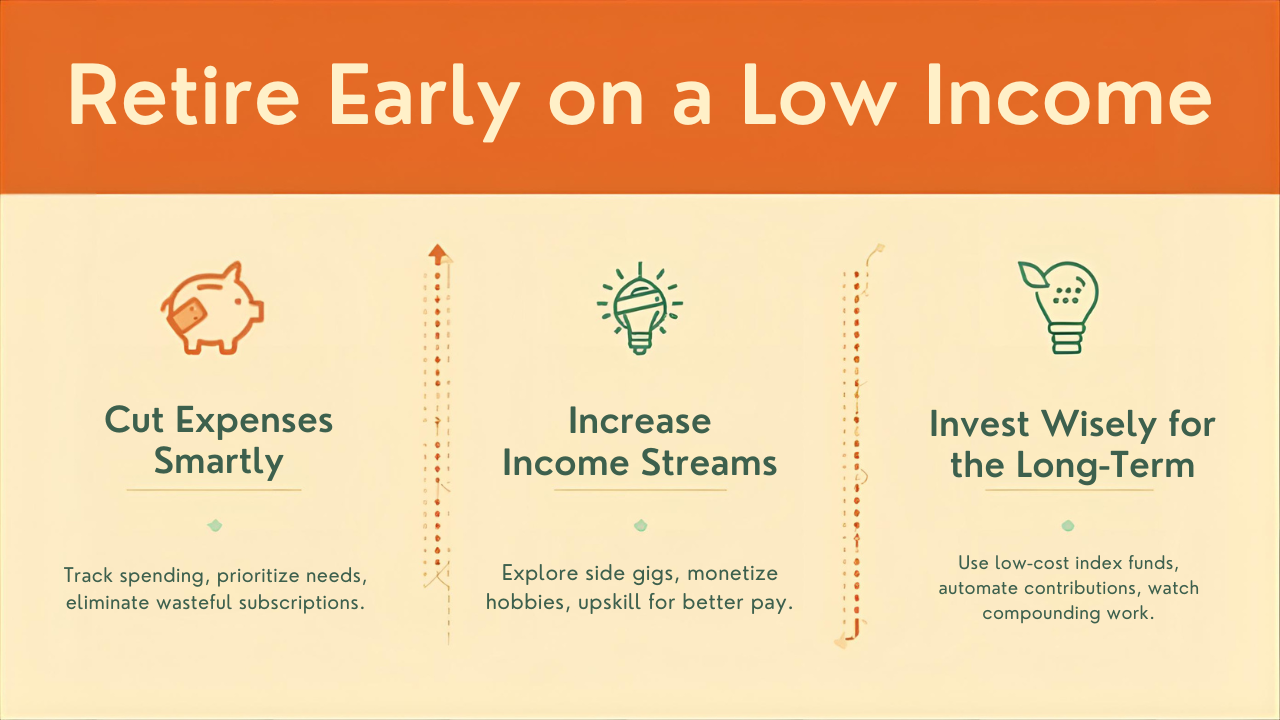
How to Retire Early with a Low Income
Retiring early with a low income is challenging but absolutely possible with extreme discipline, planning, and a focus on increasing your savings rate. This is often referred to as the “FIRE” (Financial Independence, Retire Early) movement, especially its “LeanFIRE” or “CoastFIRE” variations.
1. Drastically Increase Your Savings Rate:
- This is the single most important factor. If your income is low, you must save a very high percentage of it. Aim for 50% or more if possible. This means living on very little.
- The Math: Your “early retirement number” is typically 25 times your annual expenses. If you can drastically cut expenses, you lower this number, making it easier to reach.
2. Focus on Reducing Major Expenses:
- Housing (The Biggest Factor):
- Live in a low-cost-of-living area.
- Rent a very small apartment or room.
- House hacking (renting out spare rooms).
- Consider alternative living (RV, tiny home) if it reduces costs significantly.
- Transportation:
- Live car-free if possible (walk, bike, public transport).
- If you need a car, buy a reliable used one outright to avoid payments, and keep insurance low.
- Food:
- Cook all meals at home.
- Meal prep.
- Buy groceries strategically (sales, generic brands).
- Minimize eating out entirely.
3. Optimize Every Other Expense:
- Utilities: Be extremely frugal (low thermostat, short showers, unplug electronics).
- Entertainment: Free activities (parks, hiking, library, free community events).
- Clothing: Buy used, mend clothes, prioritize function over fashion.
- Subscriptions: Only keep essentials, or rotate subscriptions.
4. Find Ways to Increase Income (Even Modestly):
- Side Hustles: Even small amounts from side gigs (delivery, freelancing, pet sitting) can significantly boost your savings rate if you’re saving almost all of it.
- Skill Development: Invest time in learning skills that could lead to a slightly higher-paying job or better freelance opportunities.
- Negotiate Raises: Always advocate for yourself at work.
5. Invest Consistently and Wisely:
- Tax-Advantaged Accounts First: Prioritize Roth IRA, 401(k), HSA. Every dollar saved on taxes is more money invested.
- Low-Cost Index Funds: As discussed above, these are ideal for long-term growth and require minimal active management.
- Consistency: The power of compounding works best over time. Even small, regular contributions add up.
6. Embrace Minimalism and Frugality:
- Early retirement on a low income requires a mindset shift. It’s about valuing experiences and freedom over material possessions.
- Question every purchase: “Do I really need this, or is it just a want?”
7. Plan for Healthcare:
- This is a major concern for early retirees, especially in countries without universal healthcare. Research options like ACA marketplace subsidies, health sharing ministries, or potential employer plans if you plan to work part-time in retirement.
Example Scenario (Highly simplified): If you manage to live on $20,000 per year, your retirement number is $500,000 ($20,000 x 25). If your income is $30,000, and you save $10,000 (33% savings rate), it will take you longer. If you can save $20,000 (66% savings rate), you reach that goal much faster. The higher your savings rate, the less time you have to work.
Retiring early with a low income is a testament to financial discipline and intentional living. It’s not about being rich; it’s about making your money work for your freedom.